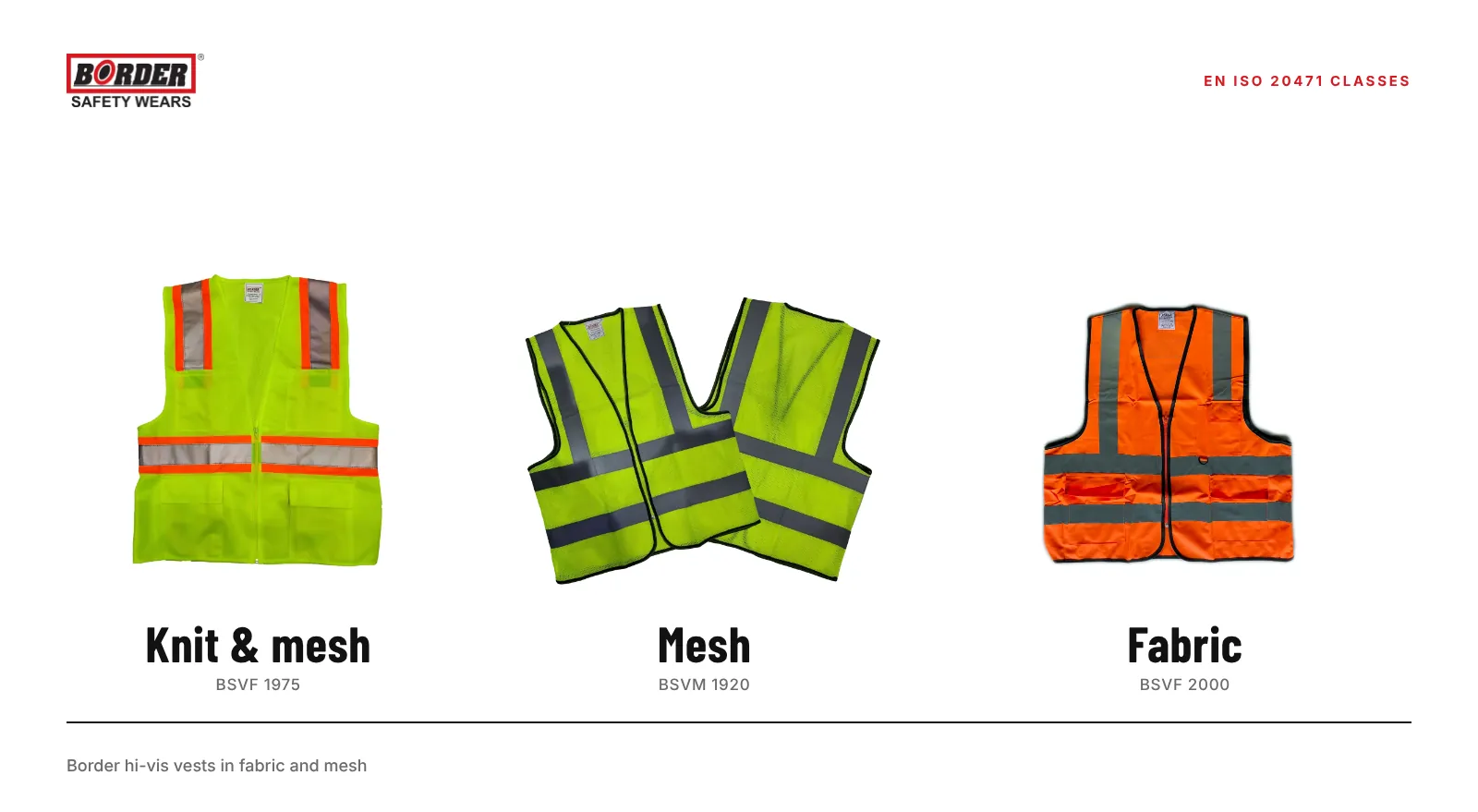
"Reflective vest" covers a lot of products. Under the European standard EN ISO 20471, high-visibility clothing is graded into three classes, and the class depends on how much visible material the garment has. Road works and traffic specifications often name a class, so it is worth knowing what each one means.
Two kinds of material
Hi-vis garments use two materials that work at different times:
- Background material: the fluorescent yellow, orange or red fabric. It makes the wearer stand out in daylight and at dusk.
- Retroreflective material: the silver tape. It sends light from headlights back towards the driver, so it works at night.
Both are needed. A vest with plenty of fluorescent fabric but little tape is hard to see at night, and the reverse is true by day.
The three classes
| Class | Fluorescent (min.) | Reflective (min.) | Typical garments |
|---|---|---|---|
| Class 1 | 0.14 m² | 0.10 m² | Hi-vis trousers on their own, harness-style bands |
| Class 2 | 0.50 m² | 0.13 m² | Vests, sleeveless jackets |
| Class 3 | 0.80 m² | 0.20 m² | Jackets with sleeves, coveralls, jacket and trouser sets |
Class 3 also requires the garment to cover the torso and have sleeves or legs with reflective bands. That is why a vest, however large, is normally Class 2. To reach Class 3, a worker wears a long-sleeved hi-vis jacket or coverall, or combines items, for example a Class 2 vest with Class 1 trousers, if the combination has been tested and is marked as Class 3.
The class is given for the smallest size of the garment, because the smallest size has the least material.
Which class for which job
- Class 3: work on or next to high-speed roads, highway maintenance, night work in traffic, and airside work where specified.
- Class 2: most construction sites, ports, warehouses, car parks and slower roads.
- Class 1: low-risk areas with slow traffic, or as part of a combination.
Your road authority, client or site plan decides. Where nothing is specified, Class 2 is the common minimum on Gulf construction sites, and Class 3 is the safer choice for any work near fast traffic.
EN 471 and EN ISO 20471
EN ISO 20471 replaced the older EN 471 in 2013. Some vests and older datasheets still refer to EN 471. The basic idea of three classes did not change, but the newer standard has updated test methods and requirements, including for garments that are washed many times. When you write a specification today, ask for EN ISO 20471. The American standard, ANSI/ISEA 107, uses its own Types and Classes and is common on projects with US clients.
Colour, washing and replacing
- EN ISO 20471 allows fluorescent yellow, fluorescent orange-red and fluorescent red. Yellow is the most common on sites; orange is often used in rail and on some roads.
- The label shows the maximum number of wash cycles the garment was tested for. After that, or when the fabric fades or the tape cracks, replace it.
- Dirt and paint cover the material and cut visibility. A dirty vest may no longer meet its class.
- Do not cut, shorten or add logos over the tape. Logos should only go on areas the manufacturer allows.
Hot weather
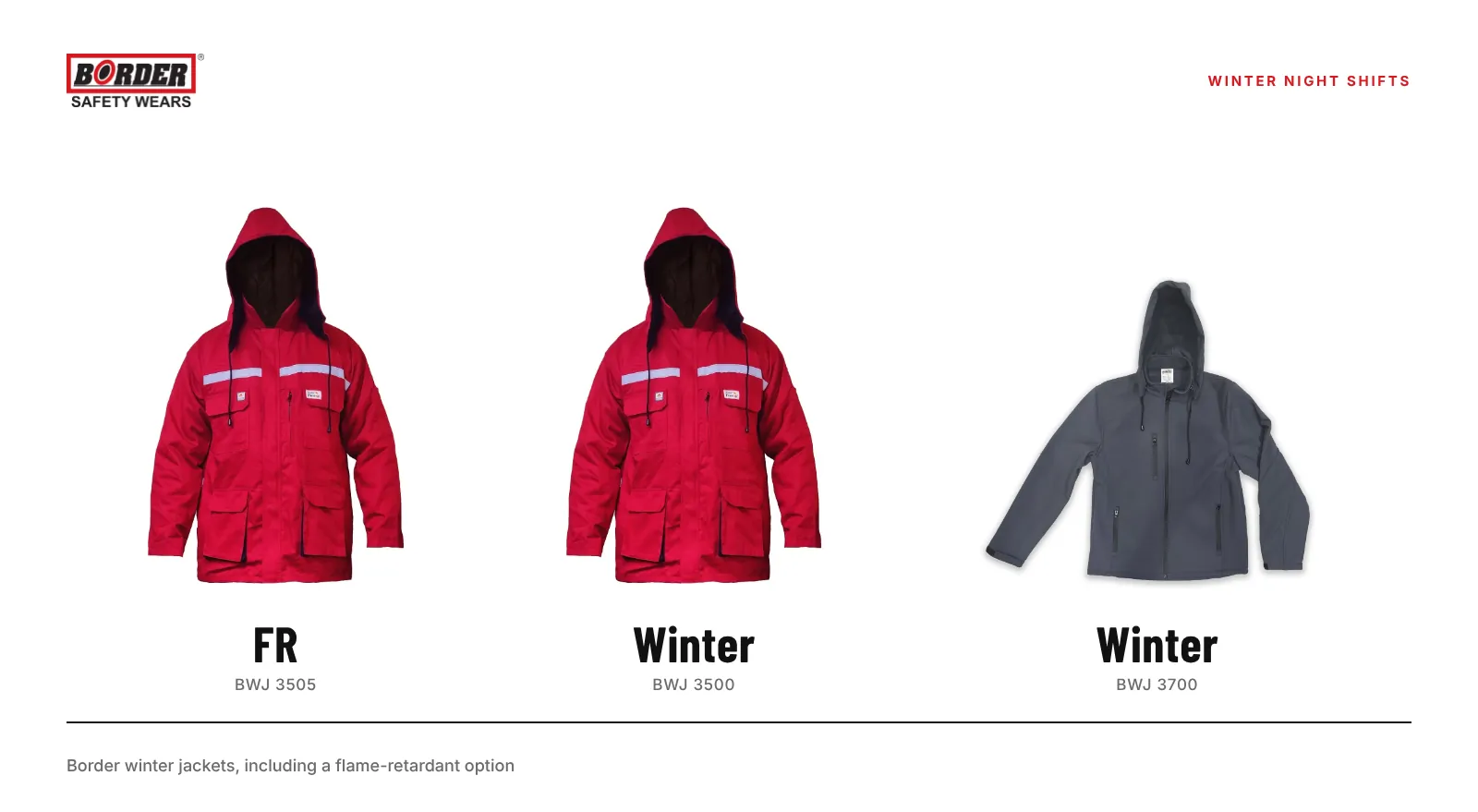
In Gulf summers, mesh vests are cooler than solid fabric, but mesh carries less fluorescent material per square metre, so check the class on the label if your spec names one. Our BSVM 1920 mesh vest is made for hot and humid sites; the BSVF 2000 is a 120 GSM fabric vest with zip and pockets for heavier daily wear. For full-body visibility, reflective coveralls such as the Supreme Brite BSC 0801 combine workwear and hi-vis, and the FR Winter Jacket BWJ 3505 lists EN ISO 20471 together with flame resistance.
Ask for the datasheet to confirm the standard and class of any vest before you buy for a specified job. Browse safety vests and jackets, or see construction PPE and port PPE.