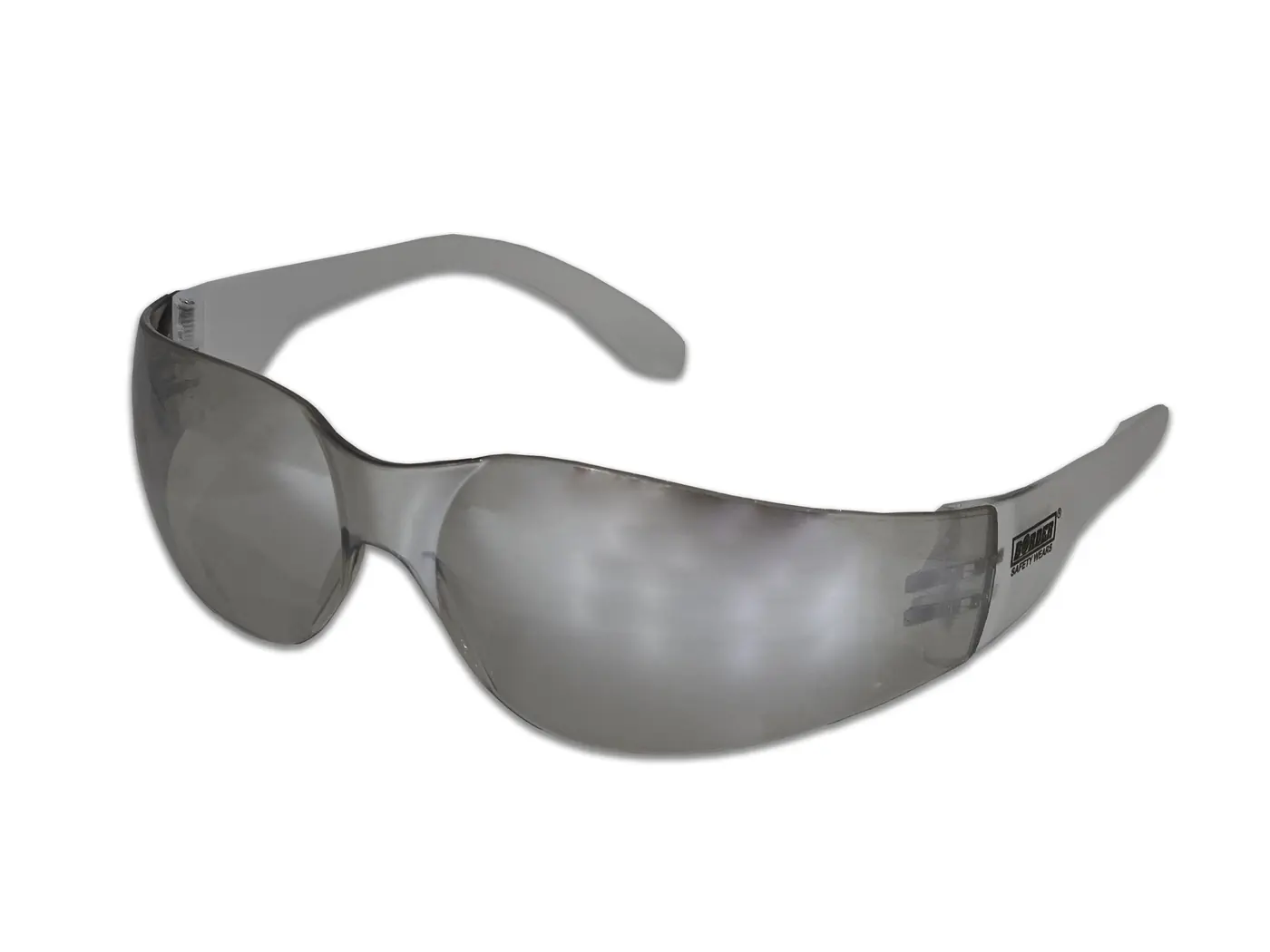
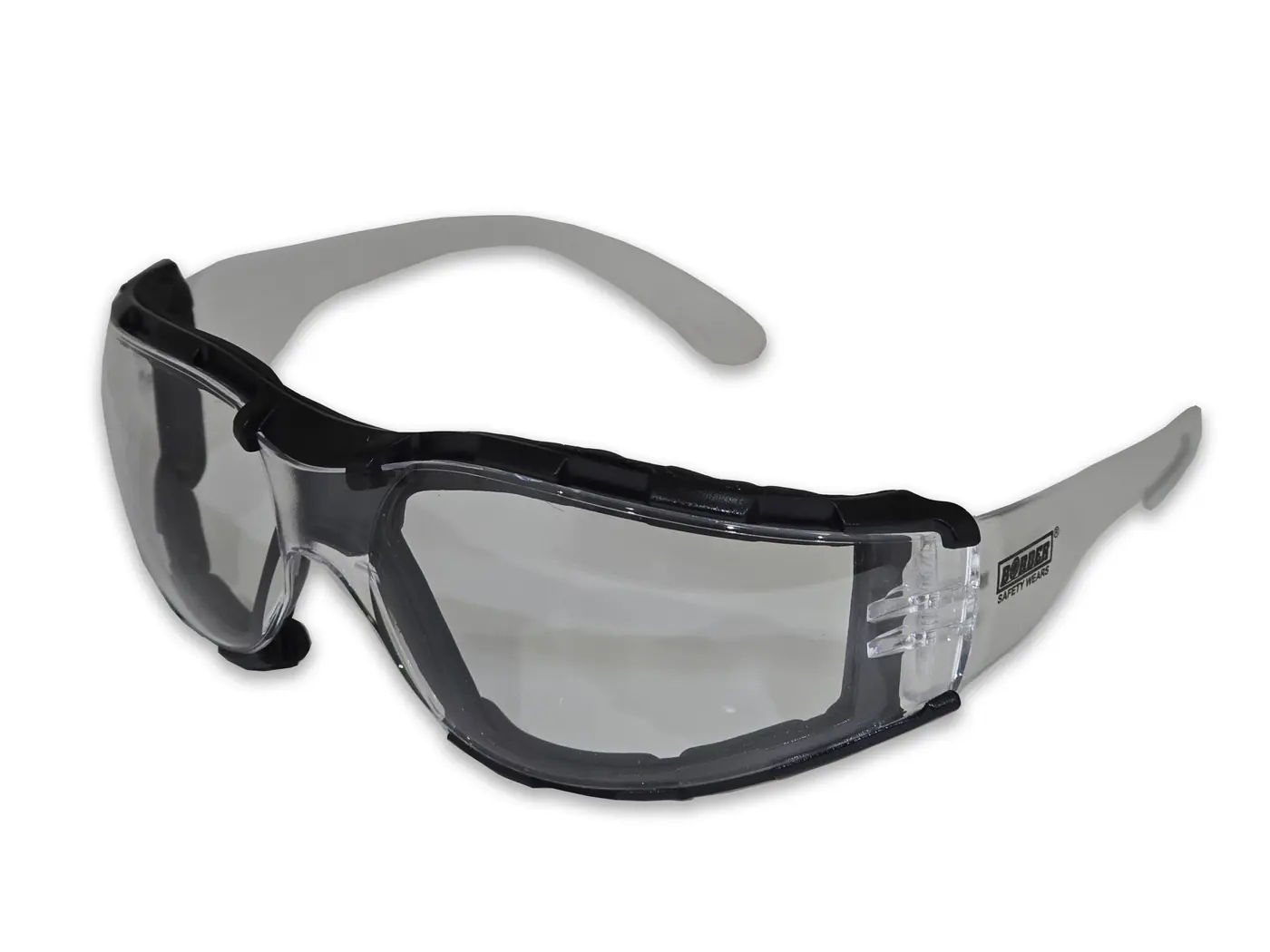
Border safety glasses and goggles for UAE sites: polycarbonate lenses in clear, smoke and wrap-around styles, plus an EVA-gasket model for a closer seal. The range is listed to EN 166 with impact grade F, EN 170, EN 172 and ANSI Z87.1.
Safety glasses and goggles supplier in UAE and Dubai
Border Safety Wears supplies Border-brand eye protection from our Deira showroom for construction, fabrication, warehousing and plant maintenance. Every model in the current range has a polycarbonate (PC) lens and is listed to CE EN 166, EN 170, EN 172 and ANSI Z87.1, with mechanical strength F (45 m/s).
Models in the range
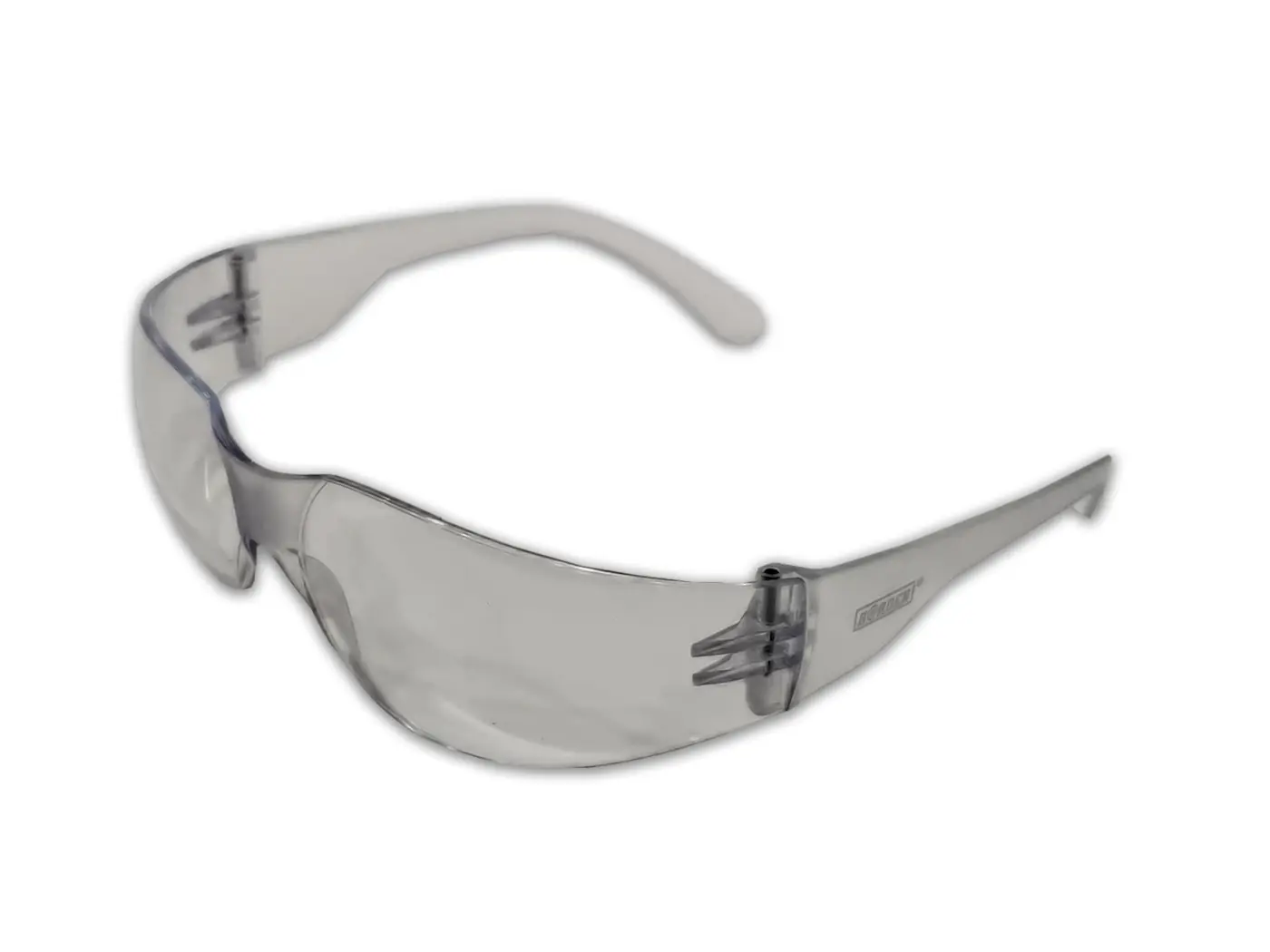
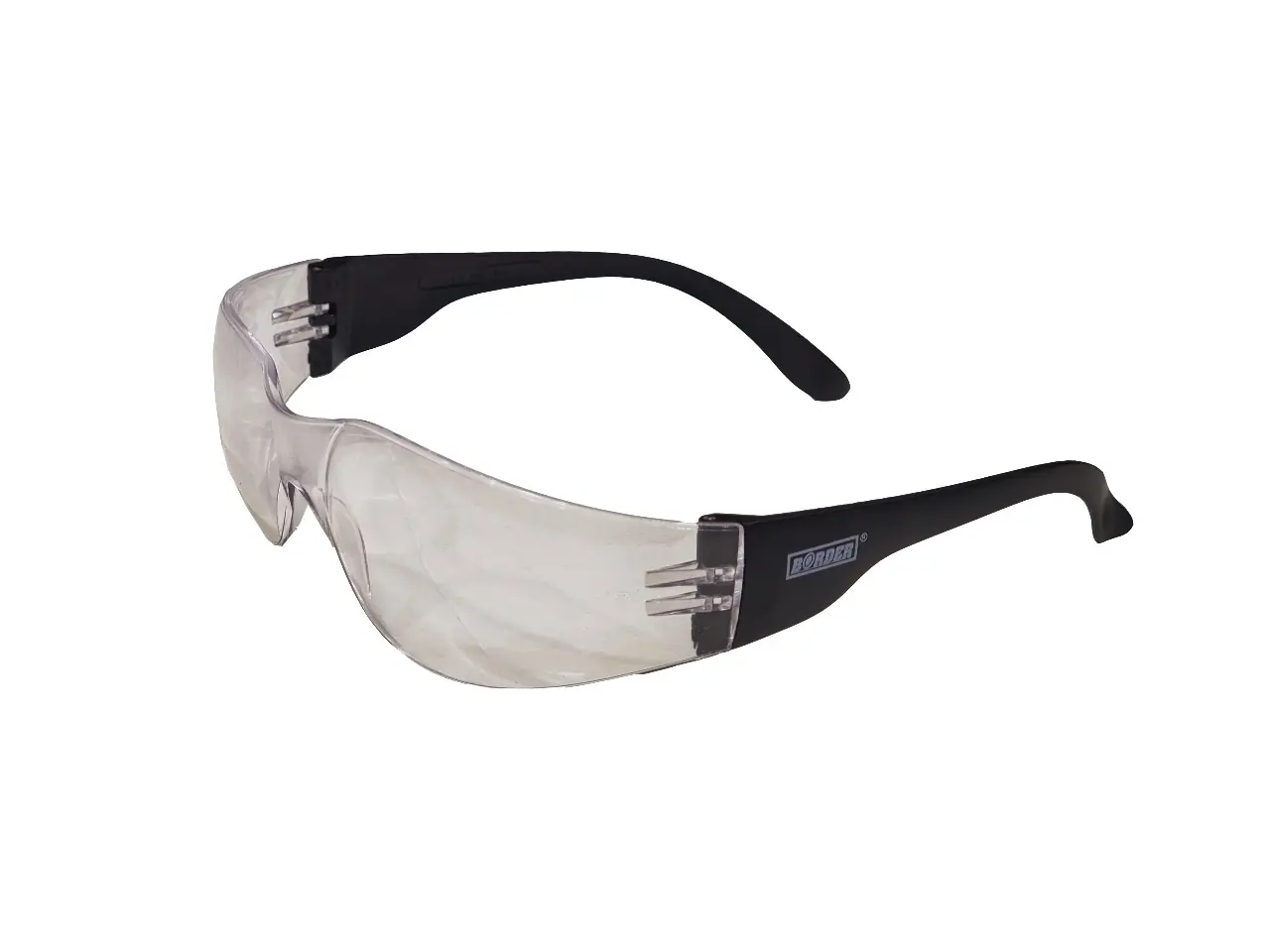
- BSG 0300: PC lens and PC legs in clear or black, a light everyday pair for general industrial work.
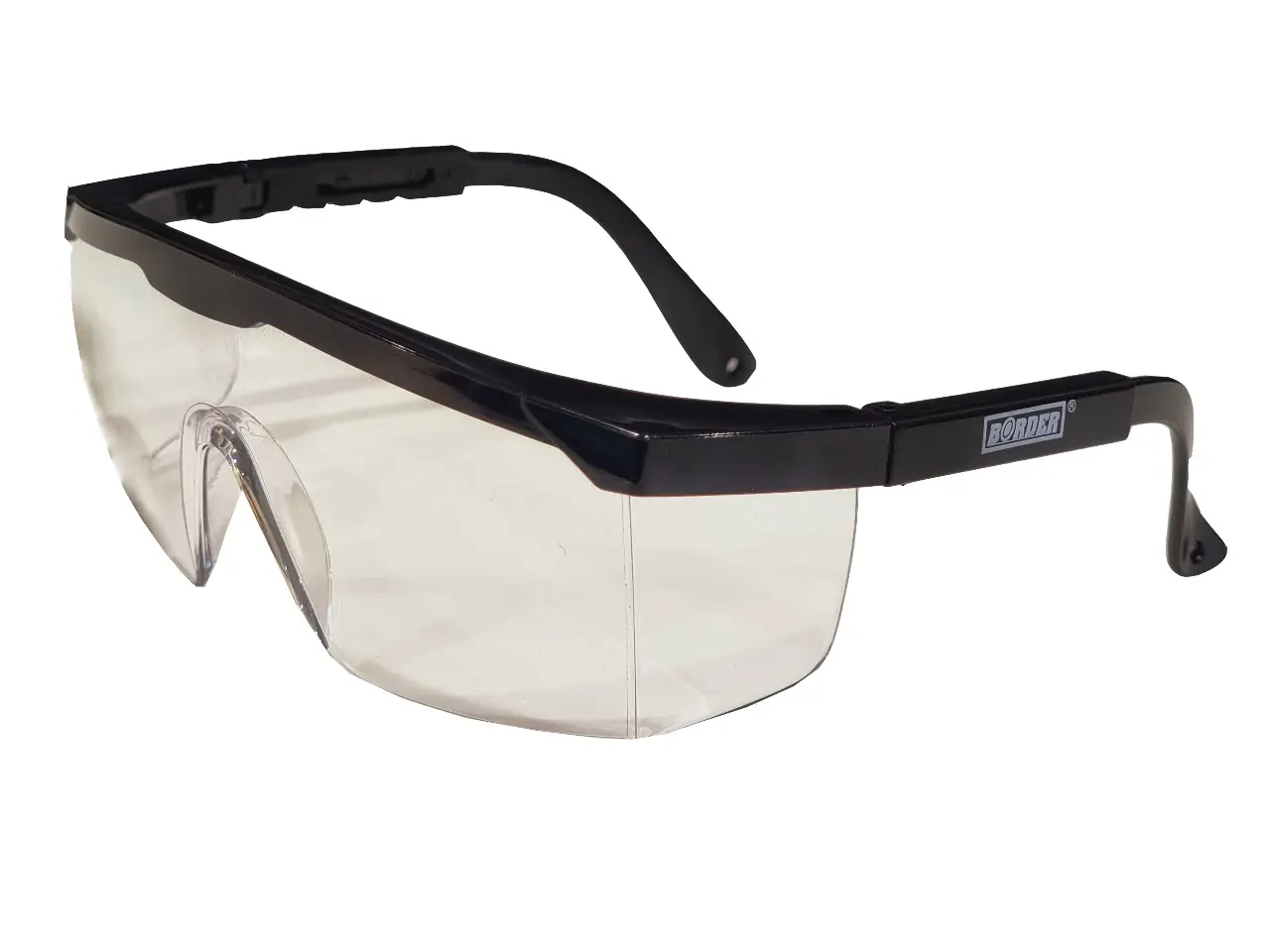
- BSG 0400: wrap-around PC lens for wider side coverage, optical class 1.
- BSG 0402: PC lens and frame with an EVA gasket that sits against the face for a closer seal around the eyes, optical class 1.
- BSG 0403: smoke lens to cut glare in bright outdoor conditions, optical class 1.
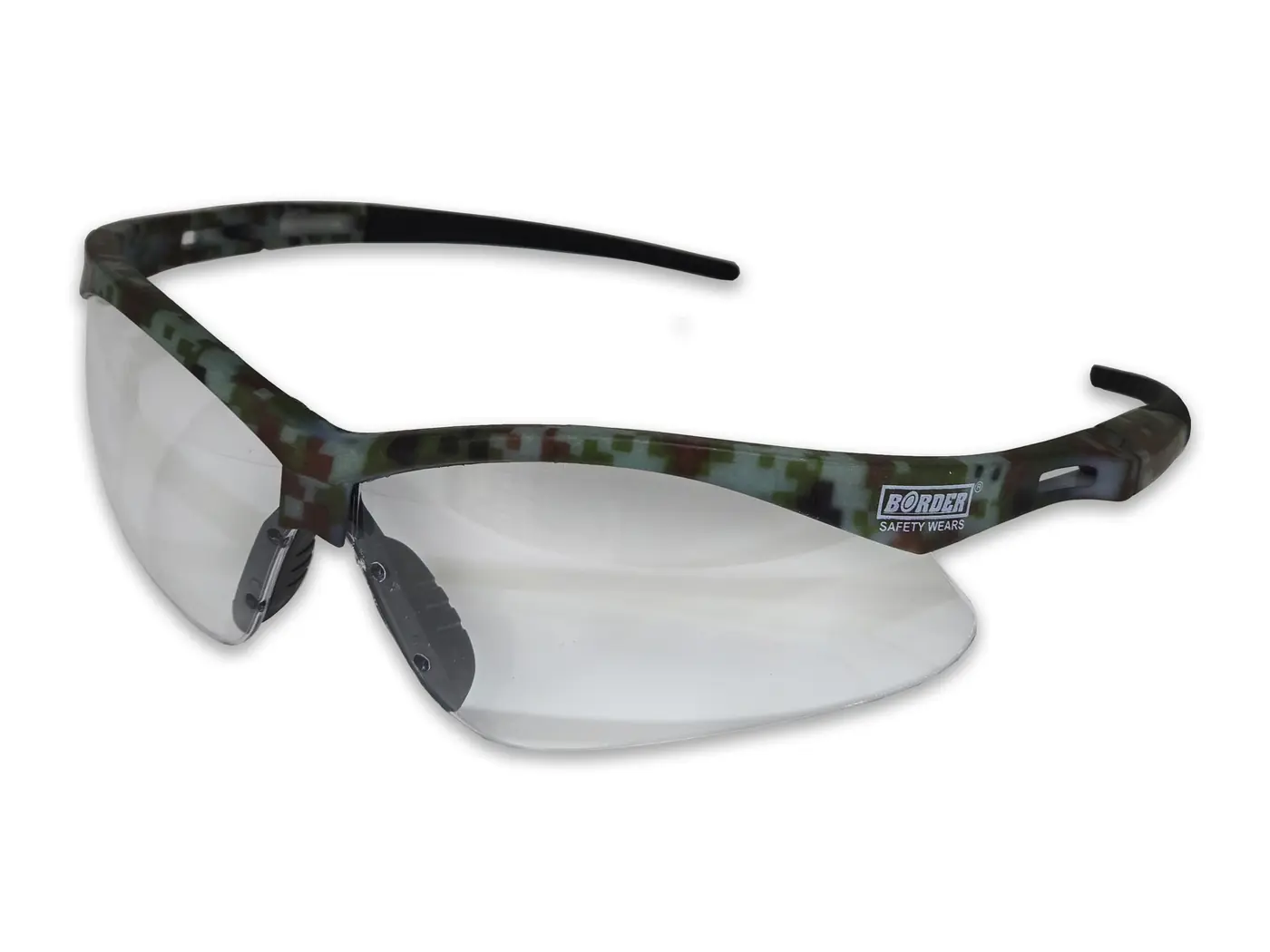
- BSG 0301 (nylon and PC frame) and BSG 0401 (nylon camouflage frame) round out the frame options.
Reading EN 166 and ANSI Z87.1 markings
EN 166 is the base European standard for eye protectors. The frame and the lens each carry a short code. These are the ones that matter most on site:
| Marking | Meaning |
|---|---|
| 1, 2 or 3 | Optical class. Class 1 is the best and suits all-day wear |
| S | Increased strength, 12 m/s steel ball |
| F | Low-energy impact, 45 m/s |
| B | Medium-energy impact, 120 m/s (goggles and face shields) |
| 3 | Liquid droplets or splashes |
| 4 | Large dust particles |
| K / N | Anti-scratch / anti-fog lens coating |
EN 170 covers UV filters, with a lens code starting 2 or 3. EN 172 covers sunglare filters for industrial use, with a code starting 5 or 6. ANSI Z87.1 is the US standard, and a Z87+ mark means the lens passed its high-impact test. Projects that follow US specifications usually ask for Z87.1 and European-led projects for EN 166, so eyewear marked to both fits most tender specs.
Before issuing, check that the frame and lens markings match the task. The 3 and 4 field-of-use markings only apply to goggles that seal to the face, so open safety glasses will not carry them.
Eye protection for Gulf conditions
- Glare: road, roof and marine crews work in strong sun for most of the year. A smoke sunglare lens such as BSG 0403 reduces squinting. Keep clear lenses for indoor work and night shifts.
- Dust and sandstorms: open glasses let fine sand in from the sides. A goggle that seals to the face is the better choice, and a 4 on the frame confirms it was tested for large dust particles. Check the datasheet for the frame marking of the model you pick.
- Fogging: stepping from an air-conditioned cabin into humid 40°C air fogs lenses quickly. An N-marked anti-fog coating helps, and so does letting the glasses warm up before entering the work area.
- Scratches: wind-blown sand scratches PC lenses. Store glasses in a pouch and replace them once vision becomes hazy.
Our guides to goggles vs safety glasses and sandstorm PPE for outdoor workers cover these choices in more detail.
Bulk supply across the UAE, GCC and Africa
Safety glasses are replaced often, so it pays to order them in bulk on volume pricing. Orders ship from Dubai with delivery within 24 hours across the UAE, and we supply contractors in Saudi Arabia, Qatar, Oman, Kuwait and Bahrain. Africa is served through Border Africa. Samples can be checked at our showroom at Baniyas Square Metro Station, Exit 1, Deira, and datasheets are on each product page.
Related categories: safety helmets, safety masks and ear protection.
Eye & Face Protection: frequently asked questions
What is the difference between safety glasses and safety goggles?
Safety glasses protect the front and sides of the eyes against flying particles but leave gaps around the frame. Goggles seal against the face, so they can also keep out dust, liquid splashes and wind-blown sand. Use glasses for general site work and goggles for grinding, chemical splash risks and sandstorm conditions.
What does F mean on EN 166 safety glasses?
F is the mechanical strength grade for low-energy impact. It means the eyewear withstood a 6 mm steel ball at 45 metres per second. Grade B (120 m/s) is a higher level used on goggles and face shields, and grade A is reserved for face shields.
Are ANSI Z87.1 safety glasses accepted in the UAE?
There is no single UAE rule, so acceptance depends on the project or client HSE specification. Specifications based on US practice usually ask for ANSI Z87.1, and European-led ones for EN 166. Eyewear marked to both, as the Border range is listed, fits most tender specs.
Can tinted safety glasses be used for outdoor work?
Yes. A smoke lens made as a sunglare filter to EN 172 reduces glare for outdoor crews in strong sun. Tinted lenses should not be used indoors in poor light or on night shifts, and they are not welding filters.
What eye protection is best during a sandstorm?
A goggle that seals to the face is better than open safety glasses, because fine sand gets in around an open frame. Look for the 4 marking on the frame, which shows the goggle was tested against large dust particles, and wear a dust mask at the same time.
How often should safety glasses be replaced?
There is no fixed interval. Replace safety glasses after any impact, or when the lens is scratched, cracked or hazy, or the frame is loose or bent. In dusty Gulf conditions, scratching is the most common reason to replace them.
Need Eye & Face Protection in bulk?Send your quantities and sizes. We reply with a quotation, usually the same working day.
Get a quote