What is the Border Safety Helmet Ratchet BSH 1240 used for?
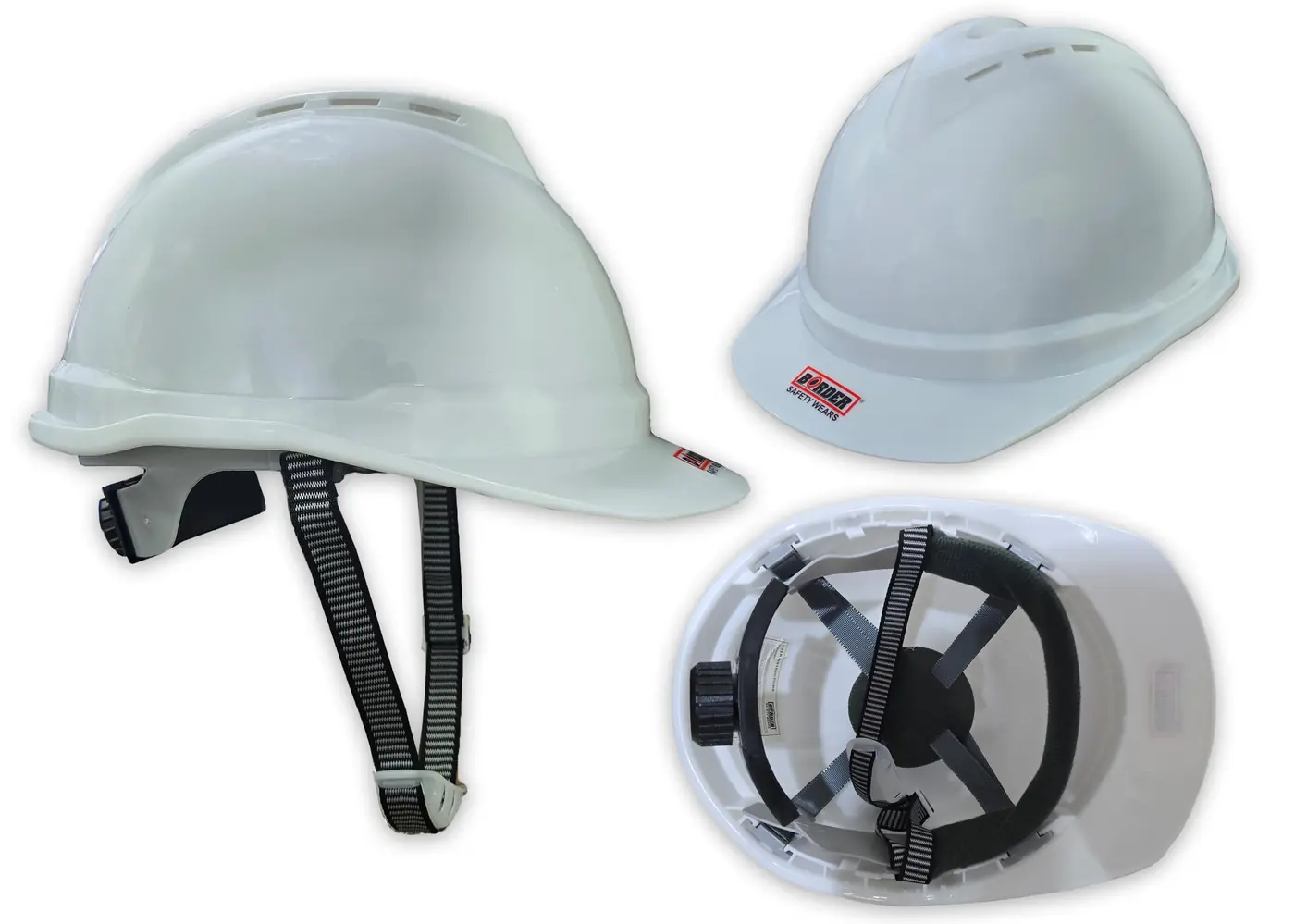
The Border Safety Helmet Ratchet BSH 1240 is designed for head protection in industrial and construction environments. Its HDPE shell, ratchet suspension and 4-point webbing make it suitable for routine site use where a safety helmet is required.
What standards does this safety helmet meet?
This safety helmet is certified to ANSI / ISEA Z89.1-2014 and EN 397:2000. These are recognised head protection standards used for workplace safety helmets in industrial settings.
What materials and construction does the Safety Helmet Ratchet BSH 1240 use?
The Safety Helmet Ratchet BSH 1240 is made from HDPE and uses a 4-point webbing suspension. It also includes ventilation slots and a ratchet suspension for fit adjustment and airflow.
What colours and size are available for this helmet?
This helmet is available in standard size and in white, blue, yellow, red and green. The colour range can help with site identification or team differentiation.
Can I request bulk orders of the Border Safety Helmet Ratchet BSH 1240?
Yes, bulk and corporate orders are available through Border PPE Trading LLC. You can request a quote using the Request Quote button on the product page, or contact the team by phone or email.
What do safety helmet colours mean on UAE construction sites?
There is no single UAE law that fixes helmet colours, so each main contractor or site sets its own code. A common pattern is white for engineers, managers and supervisors, yellow for general workers, green for safety officers and red for fire wardens or emergency staff. Always follow the colour code in your project's HSE plan.
What is the difference between EN 397 and ANSI Z89.1?
EN 397 is the European standard for industrial safety helmets and covers shock absorption, penetration and flame resistance, with optional markings for electrical insulation, low or high temperature, lateral deformation and molten metal. ANSI/ISEA Z89.1 is the US standard and sorts helmets by Type (I for top impact, II for top and side) and Class (G, E or C for electrical protection). Many helmets sold in the Gulf carry both.
How long does a safety helmet last?
There is no fixed legal expiry, but most manufacturers mark the production date inside the shell and give a replacement period for the shell and a shorter one for the harness. In strong sun, plastics age faster, so UAE sites often replace helmets sooner. Replace a helmet straight away after any significant impact, or if the shell shows cracks, chalky fading or brittleness.
Is a ratchet or pin-lock safety helmet better?
A ratchet helmet adjusts with a knob at the back, so the wearer can tighten or loosen it with the helmet on, which suits long shifts and wearing a cap underneath. A pin-lock helmet is set by pushing pins into holes in the headband, which is simple and usually costs less for large crews. Both can meet EN 397, so choose on comfort and how often the fit needs changing.
Are HDPE or ABS helmets better for hot climates?
HDPE helmets are light and economical, while ABS shells are more rigid and generally hold up better under heat. Both plastics are affected by long exposure to strong sun, so storage out of direct sunlight and regular inspection matter more than the material alone. Check the shell date and the manufacturer's replacement guidance for either type.
Can a vented safety helmet be used for electrical work?
No. Ventilation slots let air in but also break the insulating shell, so vented helmets are not suitable where electrical insulation is required. For electrical work, choose an unvented helmet marked 440 Vac under EN 397 or Class E under ANSI/ISEA Z89.1, and check the marking inside the helmet.
 Tap to enlarge