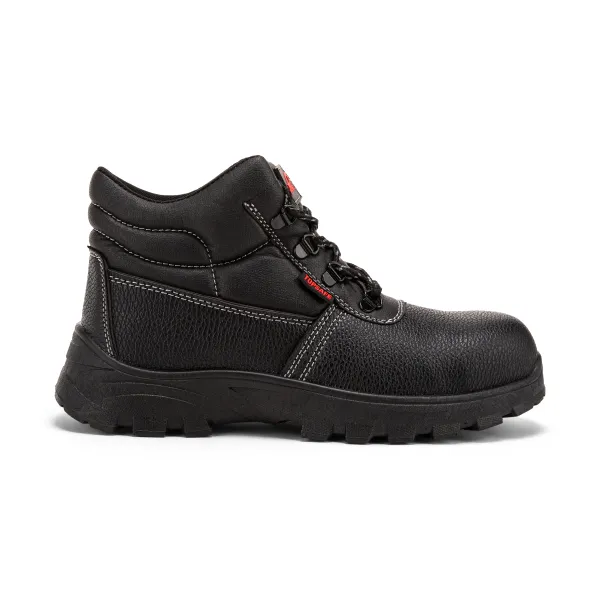
What type of footwear is the Border Safety Shoes BFP 2081?
Border Safety Shoes BFP 2081 is a BORDER safety shoe in the Foot Protection range. It is designed as an S1P safety shoe for workplace use, with a suede leather upper, composite toe cap and Kevlar midsole.
What protection features does the BFP 2081 safety shoe include?
The BFP 2081 includes a composite toe cap and a Kevlar midsole. These features are used in safety footwear to help protect the toe area and provide underfoot resistance in work environments where S1P footwear is needed.
What materials are used in the Border Safety Shoes BFP 2081?
This safety shoe uses a suede leather upper, a composite toe cap, a Kevlar midsole and a PU outsole. It is a slip-on design, which makes it convenient for daily wear.
What sizes and colour are available for the BFP 2081?
The BFP 2081 is available in grey and in sizes 39 to 45. This makes it suitable for standard workplace footwear requirements where a simple size range is needed.
Can I request a quote for bulk orders of this safety shoe?
Yes. Border PPE Trading LLC accepts bulk and corporate orders, and buyers can request a quote through the product page. You can also contact the team by phone or email for procurement enquiries.
What is the difference between S1P and S3 safety shoes?
Both have a 200 joule toe cap and a penetration-resistant midsole. S3 adds an upper that resists water penetration and a cleated outsole for grip on loose ground. S1P suits dry indoor work and warehouses, while S3 is the usual choice for outdoor construction, wet areas and oil and gas sites.
What does SRC mean on safety shoes?
SRC is a slip-resistance marking from EN ISO 20345:2011. It means the sole passed both the ceramic tile with detergent test (SRA) and the steel with glycerine test (SRB). Under the 2022 edition the tile test is built into every category and an extra SR marking replaces the old letters.
Is EN ISO 20345:2011 still valid, or do I need 2022 shoes?
Shoes certified to the 2011 edition are still sold while their certificates are valid, and both editions are on the market in the UAE. The 2022 edition changed the slip test, made fuel oil resistance an optional FO marking and added PL and PS codes for non-metal midsoles. If your tender or client spec names the 2022 edition, order models certified to it and check the marking inside the tongue.
Are steel toe or composite toe safety shoes better?
Both pass the same 200 joule impact and 15,000 N compression tests, so the protection level is the same. Composite toe caps are metal-free, lighter and do not conduct heat or cold like steel. Steel caps are thinner, which can give a slimmer toe shape, and many heavy-duty leather models use them.
How often should safety shoes be replaced?
EN ISO 20345 does not set a fixed replacement date. Replace shoes after any heavy impact on the toe, or when the toe cap or midsole is exposed, the sole is worn smooth or cracked, or the upper has split. Gulf heat and humidity wear PU soles faster, so inspect them regularly.
Do you supply safety shoes in bulk outside the UAE?
Yes. We deliver within 24 hours across the UAE and supply bulk orders to Saudi Arabia, Qatar, Oman, Kuwait and Bahrain, with Africa served through Border Africa. Sizes run from EU 36 to 48 depending on the model, and you can check fit at our showroom in Deira, Dubai before ordering.
 Tap to enlarge